Own It: How the Body Positivity Wave Is Completely Rewiring What Americans Find Attractive
Let's be real — for a long time, mainstream media had a pretty narrow idea of what a desirable body looked like. Magazines, movies, and early internet culture all pushed variations of the same template. But somewhere around the mid-2010s, cracks started forming in that wall. By 2024, that wall is basically rubble.
Body positivity isn't a fringe hashtag anymore. It's a full-blown cultural force, and it's changing the way Americans — across ages, genders, and preferences — think about attraction, self-worth, and what it even means to look good.
The Algorithm Didn't Start This, But It Sure Helped
Social media platforms have an uncomfortable history of suppressing content from creators with larger bodies or non-conventional appearances. But community pressure, creator advocacy, and shifting advertiser interests have nudged platforms toward broader representation — at least partially.
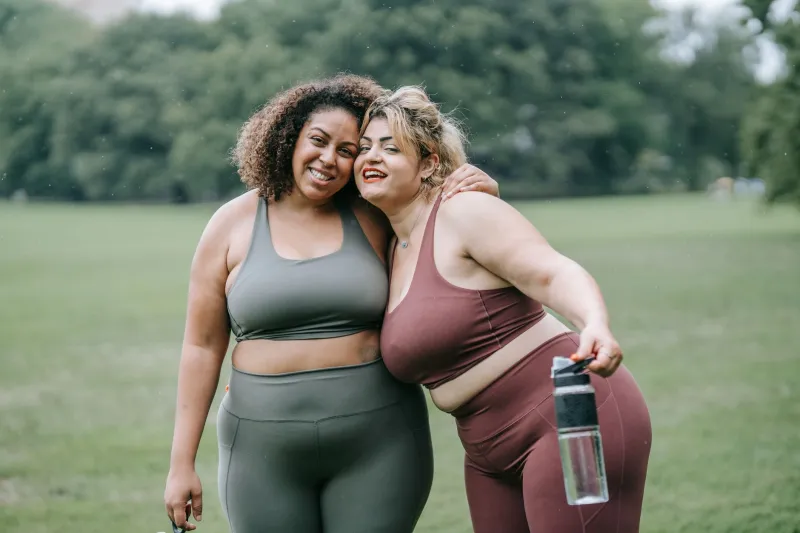
The result? More people are seeing bodies that look like theirs reflected back at them in aspirational contexts. Fitness creators with thick thighs and round backsides are racking up millions of followers. Lifestyle influencers who don't fit the old-school model are landing brand deals and magazine covers. That visibility matters more than most people realize.
"When someone sees a body that resembles their own being celebrated — genuinely celebrated, not just tolerated — something shifts internally," says one clinical psychologist who specializes in body image and works with young adults in Los Angeles. "It's not just feel-good messaging. There's real psychological data showing that diverse media representation correlates with improved self-esteem and reduced body dysmorphia symptoms."
Confidence Is the New Currency
Here's the thing about body positivity that often gets lost in the discourse: it was never really about telling everyone their body is perfect. It's about decoupling self-worth from physical conformity — and that distinction is huge.
Creators who have built massive audiences in the fitness and lifestyle space in 2024 will tell you the same thing: confidence reads. It photographs. It translates through a screen in a way that no specific body measurement ever could.
Take the explosion of booty-centric fitness content, for example. Creators showing off the results of their glute training come in every shape, size, and background imaginable. What they share isn't a particular look — it's an energy. An unapologetic ownership of their body and what it can do. Audiences respond to that viscerally, and the comment sections prove it.
"People aren't just hitting follow because someone looks a certain way," one fitness content creator with over 800,000 followers told us. "They're following because that person makes them feel something. That's usually confidence, inspiration, or just the vibe that it's okay to take up space."
Dating in the Age of 'All Bodies Are Valid'
The cultural shift is doing something interesting to dating dynamics, too. Dating app data from 2023 and 2024 consistently shows that users are expanding their stated physical preferences — and that self-described confidence is one of the top traits people list as attractive, across gender lines.
Psychologists point to a concept called "social proof" — the idea that when we see something widely celebrated, we recalibrate our own sense of what's desirable. If your entire social media feed is celebrating curvy figures, thicker builds, and non-conventional physiques, your brain quietly updates its internal reference points.
This isn't manipulation. It's just how human attraction works. It has always been culturally constructed to a significant degree. The difference now is that the culture doing the constructing is far more democratic than it used to be.
"We used to have maybe five or six major media gatekeepers deciding what was beautiful," notes a cultural studies researcher based in New York. "Now there are millions of micro-publishers doing that work, and they reflect a much wider range of human experience. That's genuinely new, and it's genuinely powerful."
The Mental Health Angle Is Real
Beyond attraction and dating, the body positivity movement is having measurable effects on mental health — particularly among younger Americans who grew up marinating in social media's early, more toxic phase.
Studies from the American Psychological Association have linked exposure to diverse body representation with lower rates of disordered eating behaviors, reduced anxiety around appearance, and improved overall self-concept. These aren't small effects. For communities that have historically been excluded from mainstream beauty narratives — including plus-size individuals, people of color, disabled folks, and LGBTQ+ communities — representation isn't just nice to have. It's clinically significant.
And when people feel better about themselves? They tend to show more of themselves. They engage more. They create content. They participate in communities — including communities like ours — with more openness and joy.
Not Everyone's Convinced, and That's Fine
It would be dishonest to pretend the body positivity movement is universally embraced or without its critics. Some argue it's been co-opted by brands looking to score points without making real structural changes. Others push back from a health angle, though most medical professionals are quick to note that shame has never been an effective health intervention.
What's harder to argue with is the lived experience of millions of Americans who say they feel more comfortable in their own skin than they did a decade ago — and who are finding community, confidence, and yes, genuine attraction in spaces that didn't used to have room for them.
The Bottom Line
Attraction has always been more complicated than a dress size or a specific silhouette. What 2024 has done is make that complexity visible in ways that stick. When someone with a body that doesn't match the old template shows up online, owns their look, and gets celebrated for it — that changes things. For them, and for everyone watching.
At Show Me Butts, we've always believed the best rear view is the one that belongs to someone who's fully comfortable showing it off. Turns out, science and culture are starting to catch up to that idea.