Bottoms Up: The Evolutionary Science That Explains Our Obsession With a Great Backside
Here at Show Me Butts, we celebrate the rear view every single day. But have you ever stopped mid-scroll and wondered why a well-shaped backside grabs your attention so completely? It's not random. It's not shallow. And it's definitely not just you. Human attraction to the posterior is one of the most universal, cross-cultural, and scientifically documented aesthetic preferences in existence. Buckle up, because we're about to get nerdy — in the best possible way.
Darwin Had a Lot to Say About This
Evolutionary biology is basically the origin story of every physical attraction humans experience, and the backside is no exception. Researchers have long argued that the shape and size of the gluteal region served as a powerful fertility signal in early human populations. A fuller, rounder posterior in females, for instance, correlates with higher estrogen levels and a wider pelvis — both of which historically signaled reproductive fitness to potential mates.
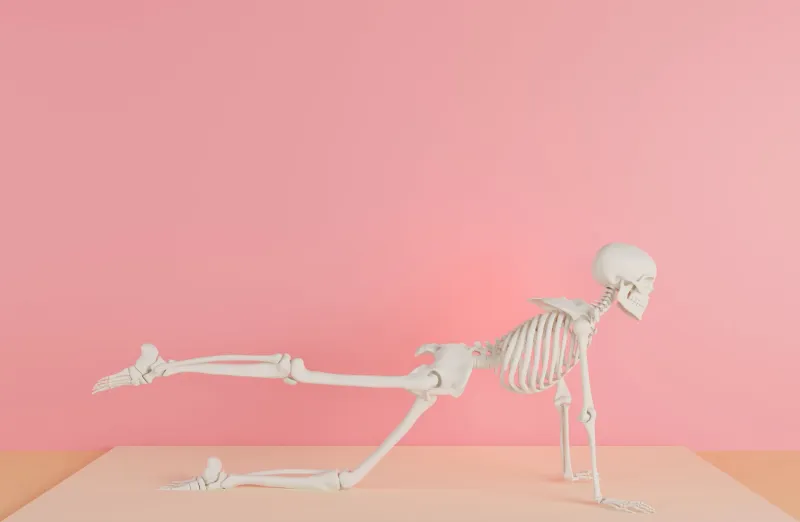
But here's where it gets really interesting: humans are one of the only primates that walk fully upright, and that shift in locomotion completely changed the game. Walking on two legs repositioned the pelvis and caused the glutes to become the largest muscle group in the human body. Unlike our primate cousins, whose backsides are relatively flat and functional, human glutes evolved to be visually prominent. We literally evolved to have noticeable butts — and to notice them.
Dr. David Lewis, a researcher who has studied mate preference and body shape, has noted that the curve of the lumbar spine — that natural inward arch just above the backside — is a key visual cue that humans are wired to respond to. It signals youth, health, and biomechanical efficiency. In other words, our brains are running ancient software that says "that's a healthy, capable human," and it expresses itself as attraction.
The Symmetry Factor
One of the most consistent findings in attractiveness research is that symmetry matters — a lot. Whether we're talking about faces, bodies, or yes, backsides, humans consistently rate more symmetrical features as more appealing. This preference isn't learned; it shows up across cultures and even in very young children who haven't been exposed to media beauty standards.
Why symmetry? Because developmental stability. A body that grew evenly, without genetic disruptions or environmental stressors, is more likely to be healthy and genetically robust. When you're admiring a perfectly balanced rear view, your brain is — on a completely subconscious level — doing a rapid health assessment. Romantic, right?
Proportions matter just as much as symmetry. Research published in journals like Evolution and Human Behavior has repeatedly found that a waist-to-hip ratio in the range of 0.7 is rated as highly attractive across a wide variety of cultures, including ones with very little exposure to Western media. That classic hourglass shape, with a defined waist giving way to fuller hips and a rounded rear, triggers a deeply embedded response that transcends fashion trends.
Culture Shapes What We Celebrate — But Not Whether We Care
Here's a nuance that's worth sitting with: while the baseline attraction to a shapely posterior appears to be universal, the specific ideals around size, shape, and proportion vary significantly across cultures and historical eras.
In ancient Greece, sculptors celebrated lean, athletic physiques. During the Renaissance, fuller, rounder figures were considered the ultimate expression of beauty and abundance. Fast forward to the early 20th century in America, and the ideal silhouette shifted toward a more angular, boyish frame — only to swing dramatically back toward curves by the early 2000s and beyond.
Then came the era of Jennifer Lopez, Beyoncé, Kim Kardashian, and Nicki Minaj — mainstream American pop culture did a full 180 on the posterior. What had once been minimized or ignored in mainstream beauty standards became the most talked-about, celebrated, and emulated physical feature in the country. Fitness apps, Instagram accounts, and entire workout programs emerged specifically around glute training. The cultural conversation around backsides went from whispered to screamed from the rooftops.
Anthropologists point out that in many African, Latin American, and Caribbean cultures, a fuller backside has been celebrated as the pinnacle of attractiveness for centuries — long before it became a trend in the US. So while American culture was catching up, other parts of the world were like, "yeah, we know, welcome to the party."
The Psychology of the Rear View
Beyond biology and culture, psychology adds another fascinating layer. The backside occupies a unique psychological space because it's simultaneously one of the most intimate and most public parts of the body. It's always present — you can't hide your rear view the way you might conceal other features — yet it remains associated with privacy and vulnerability.
This duality creates a kind of psychological charge. Psychologists who study desire and attraction have noted that the posterior triggers both aesthetic appreciation and a sense of intimacy, which is a potent combination. It's not just that a great backside looks good; it's that noticing one feels like a small act of closeness, even from a distance.
There's also the movement component. A great still image is one thing, but the way a well-developed posterior moves — the subtle dynamics of walking, the shift of weight, the rhythm of motion — activates a completely different set of neural responses. Motion draws the eye instinctively, and the posterior is one of the most visually dynamic parts of the body in motion. Your attention isn't just captured; it's held.
So What Does All This Mean for Us?
At Show Me Butts, we've always operated on the simple premise that appreciation for a great rear view is one of the most natural things in the world. And science? Science agrees with us completely.
From the evolutionary pressures that literally shaped the human body into its current form, to the cross-cultural data on symmetry and proportion, to the psychological complexity of desire and attraction — every angle of inquiry points to the same conclusion: loving a great backside is hardwired into us.
So the next time someone gives you grief for lingering on the rear view a little longer than strictly necessary, you can look them dead in the eye and say, "I'm just honoring millions of years of evolutionary biology." And then come back here, because we've got plenty more where that came from.