Grow What You've Got: The No-BS 2024 Workout Guide to Building a Better Backside
Let's be real — we're a site that deeply appreciates a great rear view, so it only makes sense that we'd want to help you build one. Whether your goal is aesthetic, athletic, or somewhere in between, the glutes are one of the most rewarding muscle groups to train. They respond well to targeted work, they're central to overall strength and posture, and yeah — a well-developed backside looks incredible.
But the fitness world is absolutely drowning in bad advice, overpriced programs, and exercises that look great on Instagram and do basically nothing in real life. This guide cuts through all of that. What follows is grounded in exercise science, informed by certified trainers, and built around what actually works for real people with real schedules. Let's get into it.
First, Understand What You're Actually Working With
The glutes aren't one muscle — they're three: the gluteus maximus (the big one responsible for most of the shape and size), the gluteus medius (crucial for hip stability and that outer curve), and the gluteus minimus (the smallest, sitting underneath the medius). A truly well-developed backside requires targeted attention to all three, not just the maximus.
This is where a lot of people go wrong. They squat endlessly, build decent overall lower body strength, and then wonder why their backside still looks flat. Squats are great, but they're not a complete glute program. You need variety, intentional targeting, and progressive overload — which we'll break down below.
The Heavy Hitters: Exercises That Actually Build Glutes
Hip Thrusts — The Undisputed King
If there is one exercise that exercise scientists and elite trainers universally agree is the most effective for glute hypertrophy (that's muscle growth, for the uninitiated), it's the barbell hip thrust. Developed and popularized by strength coach Bret Contreras — literally nicknamed "The Glute Guy" — the hip thrust places the glutes under maximum tension at full extension, which is exactly the stimulus needed for growth.
How to do it: Sit on the floor with your upper back against a bench, feet flat on the ground, barbell across your hips. Drive through your heels and thrust your hips upward until your body forms a straight line from shoulders to knees. Squeeze hard at the top. Lower slowly. That's one rep.
Start with bodyweight to nail the form, then progressively add weight. Most people are surprised by how quickly they can load this movement.
Romanian Deadlifts — The Secret Weapon
The Romanian deadlift (RDL) is criminally underused by people chasing glute gains. Unlike a conventional deadlift, the RDL keeps a soft bend in the knees and emphasizes a hip hinge, which stretches the hamstrings and glutes under load — a powerful driver of muscle growth.
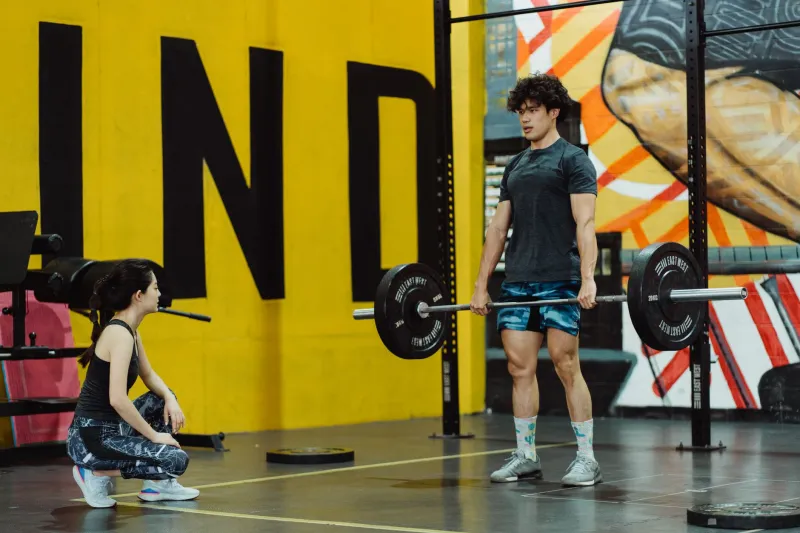
Hold a barbell or dumbbells in front of your thighs, hinge at the hips while keeping your back flat, lower the weight until you feel a deep stretch in your hamstrings, then drive your hips forward to return to standing. The key is feeling the glutes doing the work, not just going through the motion.
Bulgarian Split Squats — Brutal and Beautiful
Few exercises are as simultaneously hated and effective as the Bulgarian split squat. With your rear foot elevated on a bench and your front foot stepped out, you lower into a deep single-leg squat position that absolutely torches the glutes and quads. The unilateral nature (one leg at a time) also helps correct imbalances, which is important for both aesthetics and injury prevention.
These can be done with dumbbells, a barbell, or even just bodyweight when you're starting out. Go slow on the descent — three to four seconds down — and feel every inch of the movement.
Cable Kickbacks — For That Outer Curve
For targeting the gluteus medius and getting that rounded outer shape, cable kickbacks are hard to beat. Attach an ankle strap to a low cable, face the machine, and kick your leg back and slightly out to the side while keeping your core tight and your back flat. The constant tension from the cable throughout the full range of motion makes this a highly effective isolation movement.
Don't swing. Don't use momentum. Slow, controlled reps with a genuine squeeze at the top are what makes this exercise actually work.
Programming: How to Put It All Together
Here's a simple, effective weekly structure for someone training glutes two to three times per week:
Day 1 — Heavy Compound Focus
- Barbell Hip Thrust: 4 sets x 8-10 reps
- Romanian Deadlift: 3 sets x 10-12 reps
- Bulgarian Split Squat: 3 sets x 10 reps each leg
Day 2 — Volume and Isolation
- Sumo Squat: 4 sets x 12 reps
- Cable Kickback: 3 sets x 15 reps each side
- Lateral Band Walk: 3 sets x 20 steps each direction
- Glute Bridge (single leg): 3 sets x 12 reps each side
Day 3 — Mixed Intensity
- Hex Bar Deadlift or Conventional Deadlift: 4 sets x 6-8 reps
- Hip Thrust (pause at top): 3 sets x 12 reps
- Step-Ups with dumbbells: 3 sets x 12 reps each leg
Rest at least 48 hours between glute-focused sessions. Muscle grows during recovery, not during the workout itself.
The Progressive Overload Principle — Why Most People Plateau
The single most common reason people stop seeing results is that they stop challenging their muscles. If you're doing the same weight, same reps, same exercises week after week, your body adapts and stops growing. Progressive overload means consistently increasing the demand on your muscles — more weight, more reps, slower tempo, shorter rest periods, or greater range of motion.
Track your workouts. Write down what you lifted. Try to beat it next session. It doesn't have to be dramatic — even adding five pounds to your hip thrust every two weeks adds up to serious progress over six months.
Nutrition: You Can't Out-Train a Bad Diet
Building muscle requires fuel, and the glutes are no exception. Here's what actually matters:
Protein is non-negotiable. Aim for around 0.7 to 1 gram of protein per pound of bodyweight daily. Chicken, eggs, Greek yogurt, cottage cheese, fish, lean beef, and legumes are all solid sources. If you're plant-based, combining sources (rice and beans, for instance) ensures you're getting complete amino acid profiles.
Eat enough overall calories. You cannot build significant muscle in a steep caloric deficit. If you're trying to build and lean out simultaneously, a modest surplus or maintenance intake is your friend. Aggressive dieting while expecting muscle growth is a recipe for frustration.
Creatine monohydrate is one of the most well-researched supplements in existence and has consistently been shown to support strength and muscle gains. It's cheap, safe, and effective. Take three to five grams daily.
Consistency Is the Unsexy Secret
Every trainer worth their certification will tell you the same thing: the best workout program is the one you actually stick to. Results from glute training typically become visible within eight to twelve weeks of consistent effort, with significant transformation possible within six months.
Take progress photos every two to four weeks rather than relying on the scale — muscle is denser than fat, and the mirror (and the rear view) will tell you a much more accurate story than your bodyweight will.
At Show Me Butts, we know a thing or two about appreciating a great backside. And trust us — there is nothing quite like the confidence that comes from building one yourself. Put in the work, eat to support your goals, and give it time. The results speak for themselves.