The View You Never See: Why Back-Body Confidence Hits Different for Your Mental Health

There's a mirror most of us avoid. Not the bathroom one we face every morning, coffee in hand, cataloging every flaw before the day even starts. The one we're talking about is the full-length, over-the-shoulder, turn-around-and-actually-look mirror moment. The rear view. And according to a growing body of psychological research, how you feel about that angle might matter way more to your mental wellness than any front-facing selfie ever could.
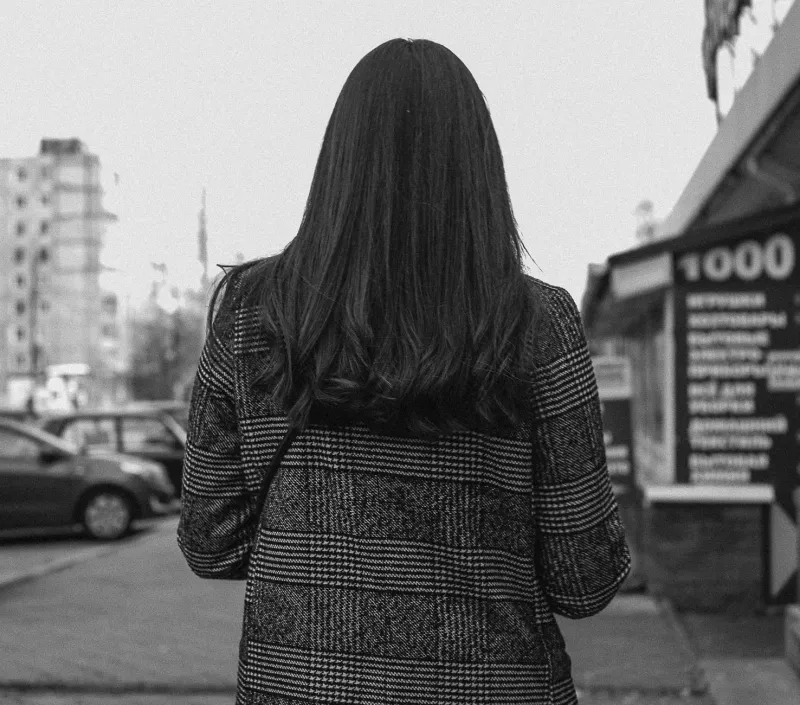
We're living in a selfie culture. Filters, ring lights, carefully chosen angles — the whole front-facing content machine is built around what we choose to present. But your backside? That's the part of you that exists in the world without your permission. It walks into rooms before you've had a chance to curate it. And that involuntary exposure, it turns out, hits the brain in a completely different way.
The Psychology of the Unseen Self
Body image researchers have long distinguished between two types of self-perception: how we think we look, and how we feel we look. Those two things are rarely the same. But there's a third layer that doesn't get nearly enough attention — how we feel about the parts of ourselves we can't easily monitor.
Your face, your stomach, your chest — these are zones you can observe and adjust in real time. You can suck in, stand straighter, angle your chin. Your rear view, though? That's largely operating on autopilot. Psychologists call this the "unmonitored self," and studies suggest that anxiety spikes significantly when people feel like they have less control over how they're perceived from angles they can't directly observe.
In plain terms: not knowing what your backside looks like — or worse, assuming it looks bad — creates a low-grade stress loop that front-facing body image work simply doesn't address. You can do a hundred affirmations about loving your face and still walk into a crowded bar convinced everyone behind you is judging your jeans.
Why Rear-View Confidence Is Its Own Thing
Here's what makes this interesting from a mental health standpoint. Research published in journals focused on body dysmorphia and self-esteem has started to map out something called "posterior body dissatisfaction" — a specific cluster of anxious feelings tied directly to the backside, thighs, and lower body in general. And it doesn't correlate neatly with how people feel about their bodies overall.
You can have high general body confidence and still carry significant anxiety about your rear view. Conversely, some people who struggle with front-facing body image feel surprisingly at peace with — even proud of — their backside. The psychological pathways are genuinely different.
Part of this comes down to cultural programming. In the US especially, glute aesthetics have become a massive cultural conversation over the last decade. From fitness culture to social media to mainstream entertainment, the rear view has been elevated into its own aesthetic category. That spotlight brings both opportunity and pressure. People who feel good about their backside in this cultural climate report measurable boosts in confidence, social ease, and even willingness to be physically intimate. People who don't? They often describe a specific, nagging self-consciousness that follows them through the day.
The Selfie Trap and Why It Falls Short
Self-love culture has done a lot of good. Genuinely. But it's also become almost entirely front-facing. The body positivity content most of us consume is built around faces, stomachs, arms — the parts that photograph easily and fit neatly into a square frame. The backside barely gets a seat at the table in most mainstream wellness conversations, which is ironic given how much mental real estate it takes up for a huge portion of the population.
Front-facing selfies, for all their power, can actually reinforce a narrow kind of body confidence — one that's contingent on the right light, the right angle, the right filter. That's not resilience. That's performance. And when the performance stops (when you're just walking down the street, living your life, existing in three dimensions), the anxiety that was temporarily quieted comes flooding back.
Rear-view confidence doesn't have a filter. It's built on something more durable: actually making peace with the part of yourself you can't control in real time. Therapists who specialize in body image are increasingly pointing to this as a frontier — helping clients develop comfort with their unmonitored self, not just the curated one.
What Actually Builds It
So how do you get there? A few things are showing up consistently in both research and anecdotal reports from people who've done this work.
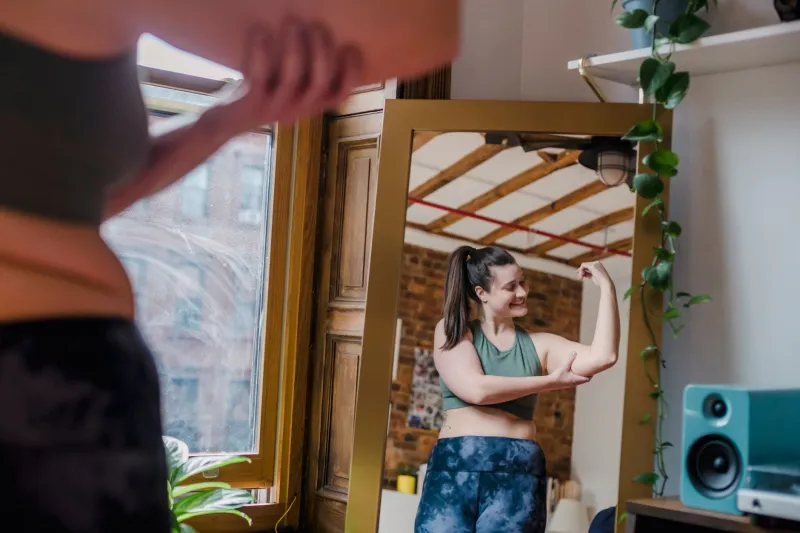
Exposure without judgment. This sounds simple and feels terrifying. Actually looking at your rear view — in a mirror, in photos, in video — without immediately launching into critique. Therapists call this "non-evaluative exposure," and it works. The more you see something without attaching a verdict to it, the less anxiety it generates over time.
Movement that builds physical connection. People who engage in activities that make them feel strong in their lower body — whether that's weightlifting, dancing, yoga, hiking — consistently report higher rear-view confidence. It's less about how the body looks and more about how it feels to inhabit it. Strength and capability reframe the narrative.
Community and representation. Seeing bodies that look like yours celebrated — not just tolerated — does something real for the brain. This is part of why spaces that genuinely embrace diverse body types in their rear-view content carry actual mental health value. Representation isn't just a buzzword; it's neurological. When your brain sees something reflected back as desirable and worthy, it updates its internal model.
Letting go of the monitor. The hardest one. Accepting that you cannot and should not have to manage how every angle of your body reads to every person in every room. That level of vigilance is exhausting and, ultimately, impossible. Rear-view confidence, at its core, is about deciding the view is worth having even when you're not watching it.
The Bigger Picture
We spend so much energy on the parts of ourselves we can present and control. And there's nothing wrong with that — self-presentation is human. But mental wellness that only functions when you're in control of the angle isn't really wellness. It's management.
The psychological research is pointing toward something that feels intuitive once you hear it: making genuine peace with your rear view — with the part of yourself that exists in the world without your supervision — is a different, deeper kind of body confidence. It's not about thinking your butt looks great (though hey, that's a fine starting point). It's about being okay existing in a body that has a back side, a full circumference, a three-dimensional presence that other people experience whether you're watching or not.
That shift, small as it sounds, changes how people move through the world. Less monitoring. Less anxiety. More presence. And that, it turns out, is worth a lot more than any front-facing filter ever gave anybody.