Body, Mind, Yours: How Taking Ownership of Your Sexuality Is the Realest Self-Care Move of 2024

Let's be honest — "self-care" has been watered down to the point where it barely means anything anymore. Bath bombs. Journaling prompts. Seventeen-step skincare routines. Don't get us wrong, those things have their place. But somewhere between the lavender candles and the wellness podcasts, a quieter, more powerful shift has been happening in American bedrooms, therapy offices, and yes, on platforms like this one.
People are reclaiming their sexuality. And it turns out, that might be the most radical act of self-care available to any of us.
What Sexual Autonomy Actually Means (And What It Doesn't)
First, let's clear something up. Sexual autonomy isn't about being reckless, performative, or constantly "on." It's not about posting everything online or having no filters. At its core, it's about agency — the conscious decision to understand, accept, and express your desires on your own terms, free from shame or external judgment.
Dr. Lena Torres, a sex-positive therapist based in Austin, Texas, puts it plainly: "When someone genuinely owns their sexuality — meaning they've done the internal work to understand what they want and feel safe expressing it — they show up differently in every area of life. Their posture changes. Their decision-making sharpens. Their relationships deepen."
That's not a small thing. That's a total personality upgrade.
The Psychology Behind the Power Move
Research backs this up in some pretty compelling ways. A 2023 study published in the Journal of Sex Research found that individuals who reported higher levels of sexual autonomy also scored significantly higher on measures of self-esteem, emotional resilience, and overall life satisfaction. The connection isn't coincidental — it's structural.
Here's why: shame is cognitively expensive. When you're spending mental energy suppressing, hiding, or second-guessing a core part of who you are, that energy isn't available for anything else. Work, creativity, relationships, ambition — they all take a hit. Lifting that weight, even partially, frees up an enormous amount of psychological bandwidth.
Psychologist and author Dr. Rachel Kim, who specializes in intimacy and identity in New York City, describes it this way: "The clients who do the hardest work — who actually sit with their desires and stop apologizing for them — tend to become the most confident people in any room they walk into. There's a direct line between sexual self-acceptance and general self-authority."
In other words, the bedroom and the boardroom aren't as separate as we like to pretend.
How Americans Are Actually Living This Out
Across the country, the evidence is anecdotal but overwhelming. In a recent informal survey of 500 American adults conducted by a wellness-focused media outlet, over 60% said that becoming more comfortable with their own sexuality had positively impacted their confidence at work. Nearly half said it improved their friendships and social connections.
Take Marcus, a 34-year-old marketing director from Atlanta. "I spent most of my twenties pretending I was someone I wasn't — in relationships, at work, everywhere. When I finally got real with myself about what I wanted, physically and emotionally, something clicked. I started speaking up in meetings. I stopped letting people walk over me. It sounds weird, but it's all connected."
Or consider Jenna, a 29-year-old fitness instructor from Denver who began creating body-positive content online last year. "I used to hide my body. Literally. Baggy clothes, avoiding mirrors, the whole thing. Getting comfortable in my own skin — and being proud of what I've built — changed how I move through the world. I'm not the same person."
These aren't isolated stories. They're a pattern.
The Body Is Part of the Equation
Here at Show Me Butts, we've always known something that mainstream wellness culture is just catching up to: the body is not separate from the self. Celebrating physical confidence — whether that's the curve of a well-trained backside, the strength in a set of legs that can deadlift serious weight, or just the simple act of liking what you see in the mirror — is part of the same project.
Sexual autonomy doesn't happen in the abstract. It's embodied. It lives in how you carry yourself, how you move, how you allow yourself to be seen. That's why so many people find that working on their physical confidence — through fitness, through creative expression, through content creation — feeds directly into their broader sense of self-ownership.
Fitness coach and wellness advocate Maya Ortiz, who's built a substantial following sharing her own journey, says the two are inseparable for her. "Every time I post something that feels bold or vulnerable, I get stronger. Not just mentally — I mean in the gym. It's like the confidence compounds."
Practical Ways to Start Claiming Your Power
If this all sounds great but abstract, here are some concrete entry points that sex-positive therapists and wellness professionals consistently recommend:
Get curious, not critical. Start by observing your desires without immediately judging them. Journaling can help — not to perform self-reflection, but to actually understand what you want.
Talk to someone. Whether it's a therapist, a trusted friend, or a community of like-minded people, externalizing your inner life reduces shame faster than almost anything else.
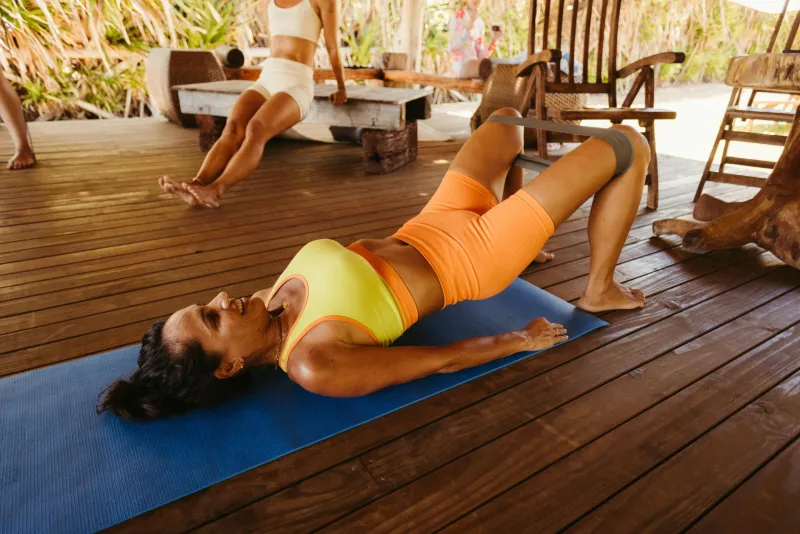
Move your body with intention. Exercise that makes you feel capable and attractive — not punished — is one of the fastest routes to physical self-confidence. Find what makes you feel good in your skin.
Consume content that reflects your values. The media you engage with shapes your sense of what's normal and desirable. Curate accordingly. Surround yourself with perspectives that affirm rather than diminish.
Set boundaries and hold them. This is the practical expression of autonomy. Knowing what you want also means knowing what you don't — and being able to say so clearly.
The Bigger Picture
What's happening in 2024 isn't a passing trend. It's a cultural recalibration — a collective exhale after years of conflicting messages about bodies, desire, and worthiness. Americans are increasingly refusing to outsource their self-image to algorithms, partners, or outdated social scripts.
And the ripple effects are real. More confident people build better relationships. They take bigger creative risks. They advocate for themselves more effectively at work and in their communities. They show up — fully, unapologetically — in ways that make the people around them feel more permission to do the same.
Owning your body, your desires, and your story isn't a selfish act. It's one of the most generous things you can do — because a person who's at home in themselves has so much more to give.
So yeah. Maybe the most radical self-care move of 2024 isn't about what you put on your skin. It's about how comfortable you are in it.