Coded Beauty: How the Algorithm Decided What a Hot Body Looks Like in 2024
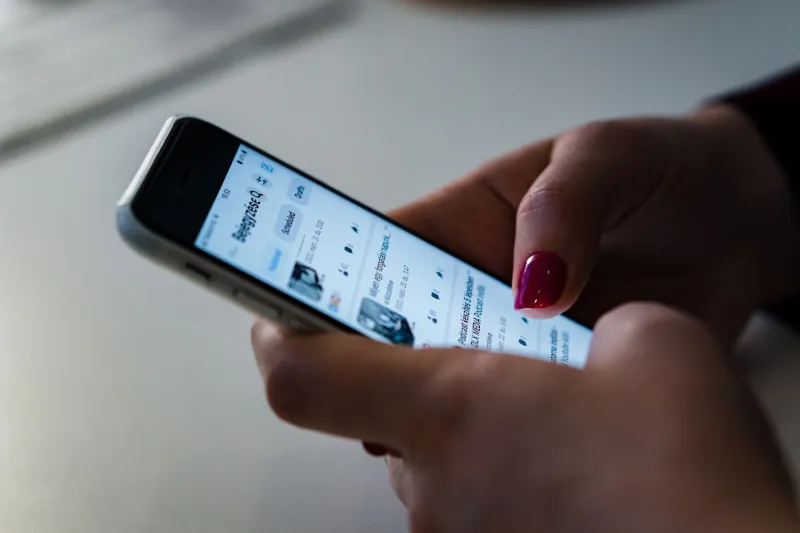
You open Instagram. You scroll. You linger for two seconds on a video of someone doing hip thrusts with an impossibly arched back and a very specific waist-to-hip ratio. You don't think much of it. The algorithm thinks everything of it.
That two-second pause just taught a machine something about you — and about what gets shown to the next million people whose behavior patterns look anything like yours. Welcome to the feedback loop that is quietly reshaping American beauty standards in real time, one micro-engagement at a time.
The Machine Doesn't Have Taste — It Has Data
Let's start with the basic mechanics, because they matter. Platforms like TikTok, Instagram, and YouTube don't curate content based on what's beautiful, healthy, or representative. They curate based on what generates engagement — watches, likes, shares, saves, and crucially, the amount of time a piece of content holds your attention before you scroll away.
"The algorithm is not making aesthetic judgments," explains digital media analyst Priya Okonkwo, who studies platform behavior patterns. "It's making probabilistic predictions. It's saying: based on the behavior of people who look like you demographically and act like you on this platform, here is content you are statistically likely to engage with."
The problem — or the feature, depending on your perspective — is that this creates a powerful amplification effect. Content that already performs well gets shown to more people, which makes it perform better, which gets it shown to even more people. The rich get richer. The aesthetic that already dominates gets more dominant.
And right now, in 2024, the aesthetic that dominates on most major American platforms has some very specific characteristics. We'll get to those.
The TikTok Silhouette
If you spend any real time on TikTok's For You page — and the average American user spends nearly an hour a day there — you've probably noticed a certain body type appearing with unusual frequency. Petite frame. Notably round glutes. Narrow waist. Athletic but soft.
This isn't an accident. Multiple content creators we spoke with described noticing significant differences in how their content performed based on what was visible in the thumbnail or the first three seconds of the video.
"I posted two videos the same week," says Jasmine R., a fitness creator based in Phoenix with around 200,000 followers. "Same workout, same lighting, same editing. One had me facing the camera. One was a rear view. The rear view got four times the views." She pauses. "I don't make the rules. I just work here."
This kind of anecdotal evidence is backed up by broader data. A 2023 analysis of fitness content performance across TikTok found that videos featuring certain body proportions — specifically, high waist-to-hip ratios — consistently outperformed others in the recommendation system, even when controlling for production quality and posting time.
Who Gets Amplified, Who Gets Buried
Here's where it gets complicated. If algorithms amplify what already performs, and what already performs reflects existing human biases — racial, gendered, sizeist — then the algorithm doesn't just reflect culture. It accelerates it.
Content creators from marginalized groups have been documenting this for years. Black creators have reported their content being suppressed or demonetized at higher rates. Plus-size creators describe hitting invisible ceilings — decent engagement within their niche, but rarely the algorithmic rocket fuel that pushes content into mainstream feeds.
"There's a body type that goes viral and a body type that gets niche traffic," says cultural critic and writer Devon Marsh, whose newsletter on digital aesthetics has a dedicated following. "The algorithm didn't invent that hierarchy. But it is absolutely enforcing it at scale."
TikTok has faced repeated scrutiny over its content moderation practices, including a 2021 leaked document that suggested moderators were instructed to limit the visibility of creators deemed "not attractive" or with "obvious physical flaws." The company denied the policy was in active use, but the document's existence raised hard questions about how human biases get baked into what appears to be neutral automation.
The Consumer Behavior Downstream
None of this stays contained to social media. What gets amplified online shapes what people buy, how they train, what procedures they consider, and — most significantly — how they feel about their own bodies when they put the phone down.
The Brazilian Butt Lift became the fastest-growing cosmetic surgery in the US over the past decade. The timing tracks almost perfectly with the rise of Instagram. Waist trainers, butt-enhancing leggings, targeted glute programs — an entire consumer economy has organized itself around an aesthetic that, in no small part, the algorithm taught people to want.
"I'm not saying the algorithm created the desire for a curvy figure," says Okonkwo. "That's evolutionarily and culturally complex. But it absolutely concentrated and commercialized it in a way that wouldn't have been possible before recommendation systems existed."
The fitness industry has been particularly adept at riding this wave. Search "glute program" on any platform and you'll find a saturated market of creators, coaches, and brands all selling variations of the same promise: you can engineer the body the algorithm keeps showing you.
The Counter-Currents
Not everyone is playing along. A growing cohort of creators and cultural critics are actively working to surface what the algorithm buries — and some of them are finding audiences hungry for exactly that.
Body-neutral fitness creators who focus on performance over aesthetics. Plus-size models who document the engagement disparity on their own accounts, making the invisible visible. Data journalists who publish platform audits showing which body types dominate recommendation feeds.
"The algorithm can be gamed, but it can also be pressured," says Marsh. "When enough users actively seek out and engage with diverse body content, the machine learns. It's slow. But it's not immovable."
There's also a generational undercurrent worth watching. Gen Z, despite being TikTok's core demographic, consistently polls as more skeptical of filtered and curated content than older cohorts. Whether that translates into different consumption behavior — or just different stated attitudes — is still playing out.
What Your Feed Says About You (And About All of Us)
Here's the uncomfortable truth at the center of all this: the algorithm didn't create beauty standards out of nothing. It learned them from us. From our clicks, our pauses, our saves, our shares. Every time a rear-view video outperforms a face-forward one, that's human behavior being recorded and fed back into the system.
The algorithm is a mirror. A distorting one — it amplifies and concentrates rather than simply reflecting — but a mirror nonetheless.
Which means changing what it shows us requires changing what we do when we're on it. Seek out the creators who don't look like the dominant aesthetic. Engage with the content that isn't already winning. Pause on the bodies that the Explore page never shows you unprompted.
It won't fix everything. The commercial incentives are enormous, the inertia is real, and the platforms themselves have choices to make about how much they want to be in the business of enforcing beauty hierarchies.
But you have a little more power here than the scroll makes it feel like you do. Use it.