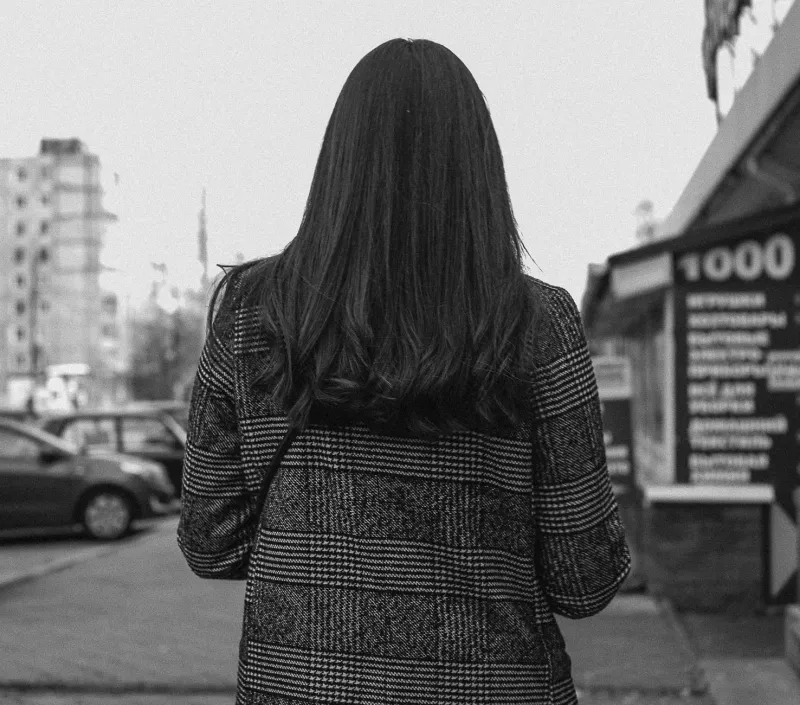
Stand Tall, Walk Different: The Real Reason Owning Your Body Changes Everything Around You

Let's be honest about something most people won't say out loud: the moment you stop being self-conscious about the way your body looks — all of it, front and back — the entire room responds differently. Not metaphorically. Actually differently. The conversations change. The eye contact changes. The opportunities that seem to materialize out of nowhere? Yeah, those change too.
This isn't a motivational speech. This is about something real, something measurable, and frankly something a little wild once you start digging into the research behind it.
The Body Talks Before You Do
Here's what behavioral scientists have been quietly documenting for decades: your posture, your gait, and the way you occupy physical space communicate a staggering amount of information before a single word leaves your mouth. A 2010 study out of Columbia and Harvard — the one that introduced most people to the concept of "power posing" — found that expansive, open body postures don't just signal confidence to others. They actually trigger hormonal shifts in the person doing them. Testosterone goes up. Cortisol goes down. You feel bolder because your body is literally telling your brain to be bolder.
Now apply that to someone who has genuinely made peace with how they look from every angle — including the rear view. That person doesn't hunch. They don't tuck. They don't do that subtle, unconscious shrinking thing that so many of us do when we're not thrilled about what we think people are seeing behind us. They just... walk. And that walk carries weight.
The Ripple Effect Nobody Warns You About
Talk to anyone who's been through a genuine body confidence shift — not a "I lost twenty pounds and now I feel great" moment, but a real psychological reckoning with their physical self — and they'll almost universally describe the same thing: other people start treating them differently before they've changed a single external thing.
That's the paradox. You feel better about yourself, so you move differently, so people respond to you differently, so you feel even better about yourself. It's a feedback loop, and it starts entirely in your own head.
Romantically, the shift is obvious. Confidence reads as magnetic. It's not about conventional attractiveness — it never really was. It's about the signal you're broadcasting. Someone who owns their body, who doesn't flinch when they catch a glimpse of themselves in a storefront window, who doesn't apologize for taking up space — that person pulls attention without trying. The back view, the side view, the full picture — when you stop fighting it, other people stop seeing something to critique and start seeing something worth noticing.
It Shows Up at Work, Too
This part tends to surprise people, but it probably shouldn't. Professional environments are deeply attuned to physical presence. Not in the superficial "dress for success" way people usually mean. In a more primal, social-signaling way.
Research published in Psychological Science found that people who display confident body language are consistently rated as more competent, more trustworthy, and more leadership-worthy — by strangers who have zero other information about them. The body is doing the resume work before the resume gets a chance.
When someone has genuinely internalized comfort with their physical self, that ease shows up in how they sit in a meeting, how they move through a networking event, how they handle being looked at. There's no performance. And paradoxically, the absence of performance is exactly what reads as authority.
So Is It Psychological, Hormonal, or Social?
Honest answer: all three, and they're impossible to fully separate.
The psychological piece is about narrative. When you stop telling yourself a story about how your body is wrong or embarrassing or something to hide, you free up enormous cognitive bandwidth. You're not managing shame in the background anymore. That energy goes somewhere — usually into being more present, more engaged, more there in whatever room you're in. People notice presence.
The hormonal piece ties back to that posture-and-power-pose research. Your body chemistry responds to how you carry yourself. Open, upright, unapologetic posture — the kind that comes naturally when you're not trying to hide your backside or suck in or angle yourself away from people — shifts your internal state in ways that are measurable in saliva samples. This isn't woo. It's endocrinology.
The social piece is about cue-reading. Humans are extraordinarily sensitive to the signals other humans send about themselves. When someone moves through the world like they belong there — like their body is a home they're comfortable in rather than a problem they're managing — other people pick that up and mirror it back. You get treated the way you're carrying yourself.
The Back View Is Where It Gets Interesting
There's something specific about the rear view that makes this conversation worth having. For a lot of people, the back of their body is the part they've spent the least time making peace with. It's the angle you can't easily check in a mirror. It's what other people see when you walk away. It's the part that feels most out of your control — and for that reason, it's often the part that carries the most anxiety.
But here's what's worth sitting with: the moment you stop catastrophizing about what you look like from behind, something shifts in how you move through the world. Your stride opens up. Your shoulders drop back. You stop doing that weird half-turn thing when you're worried someone's looking. You just walk. And that walk — unguarded, unhurried, unapologetic — is genuinely one of the most attractive things a human body can do.
This site exists, in part, because there's something undeniably compelling about a person who owns their rear view. Not because of a specific shape or size, but because of what that ownership communicates. Confidence from behind is confidence in full. It means you've accepted the whole picture.
What Actually Changes First
If you're waiting for external validation before you let yourself feel good about your body, you're going to be waiting a long time. The research is pretty clear on the sequence: the internal shift comes first. The external response follows. Not the other way around.
Start with the walk. Seriously — just change the walk. Shoulders back, chin level, stride that takes up the space you're entitled to. Do it before you feel like you've earned it. The hormones will catch up. The room will catch up. And eventually, so will you.
The confidence paradox isn't really a paradox at all. It's a loop. And the only way in is to start it yourself.